Academy

Where does it come from?

Inhalation refers to the method of drug delivery in which drugs are atomized by a special delivery device and inhaled into the lungs by the patient in the form of an aerosol to exert local or systemic effects for preventive, therapeutic or diagnostic purposes.

Suitable for

It is the preferred method of drug delivery for the treatment of asthma and chronic obstructive pulmonary disease (COPD), and can also be used for the treatment of respiratory diseases such as pulmonary fibrosis and lung cancer; in addition, it is also suitable for replacing the injectable route of delivery of peptides and proteins, and can be used for systemic drug delivery, gene therapy, or vaccine delivery, and other situations.

Advantages of nebulized inhalation therapy

Alveoli vary in size and shape, with an average diameter of 0.2 mm. Adults have about 300 to 400 million alveoli, with a total area of nearly 100 square meters, all of which unfold about as large as 25 ping-pong tables, which is several times larger than the surface area of human skin.

Therefore, nebulized inhalation drug delivery has the following advantages:
Fast onset of action: large absorption surface area, rich capillary network, alveolar epithelial cell layer is thin, thus making the lungs to give drugs fast onset of action.
High bio-availability: hepatic first-pass effect can be avoided. At the same time, the activity of biological enzymes is low, reducing the hydrolysis of the drug, so that the drug is easy to be rapidly absorbed through the alveolar surface and maintain its biological activity, so that it can play a highly effective therapeutic effect in the lungs.
Low side effects: localized administration, low dose, low toxicity and few systemic adverse effects.
High compliance: no need for patients to deliberately cooperate, low irritation, good compliance, suitable for acute and long-term treatment.
In addition to the traditional treatment of asthma and COPD-based diseases, good clinical data have been harvested for other areas in recent years. The concentration of alveolar epithelial lining fluid after 2.5 h of nebulized inhaled tobramycin is 250 times higher than that of intravenous injection. Nebulized inhalation of Neocoon vaccine yielded a better immune response than injected vaccine and produced mucosal immunity.

Particle settling

After aerosols are generated by a nebulizing device, they settle in the airways and lungs of the human body via three modes: inertial impact, gravitational deposition, and Brownian motion. And the location of deposition is related to the size of the particles. Effective nebulized particles should have a diameter of 0.5-10 μm, with those of 5-10 μm mainly deposited in the oropharynx and those of 3-5 μm mainly in the lungs.

Commonly used nebulized inhalation drugs

Inhaled glucocorticoids ICS: budesonide (BUD) and beclomethasone propionate (BDP)
Bronchodilators: short-acting selective β2 agonists (SABA), including terbutaline and salbutamol;

Short-acting cholinergic receptor antagonists (SAMA): ipratropium bromide
Antimicrobials: tobramycin inhalation solution
Expectorants: including N-acetylcysteamine and Ambroxol hydrochloride

Where does it come from?

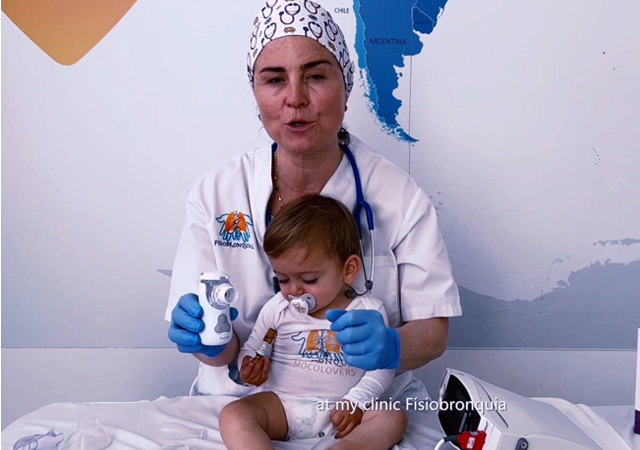
Case study children with PCD in the community of Madrid, Spain, have shown significant improvement with Feellife's AirKids professional medical-grade nebulizer. Nebulized inhalation treatments are fast-acting and highly compliant, requiring no patient intervention, which facilitates the long-term treatment of children using the device. Children with PCD in the community of Madrid, Spain, have shown significant improvement with Feellife's AirKids professional medical-grade nebulizer. Nebulized inhalation treatments are fast-acting and highly compliant, requiring no patient intervention, which facilitates the long-term treatment of children using the device.
About Lung Health Management

COPD is a common, preventable and treatable chronic airway disease, and the World Health Organization (WHO) predicts global deaths from chronic obstructive pulmonary disease (COPD) and its related disorders by 2060 to be more than 5.4 million per year.

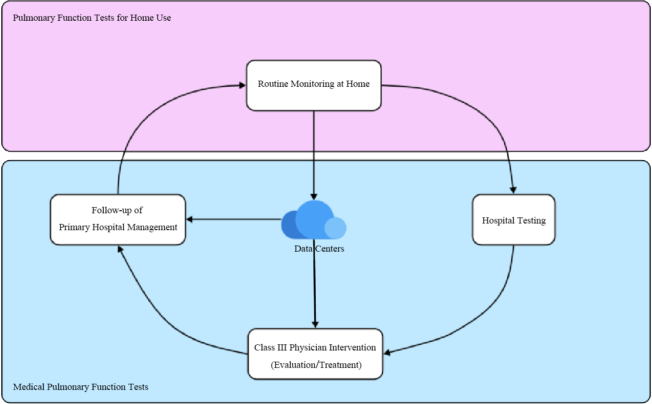
Pulmonary Function Tests

Pulmonary function tests are the gold standard for the diagnosis of COPD and should be routinely performed for early diagnosis of COPD. (Global Initiative for Chronic Obstructive Pulmonary Disease) Long-term smokers, people with recurrent respiratory infections, people with dust exposure or contact, and high-risk groups with severe long-term exposure to indoor pollution should be more likely to be tested early and treated promptly.

The Role of Lung Function Tests

Currently, in the judgment of airflow limitation of patients, pulmonary function test, as a more objective and intuitive method, is widely used in the diagnosis and treatment of COPD, and has shown a better role in the treatment and prognosis of COPD.
FEV1 is the most reproducible indicator and has great value in the diagnosis and monitoring of obstructive ventilation dysfunction lung diseases such as asthma and COPD.
FEV1 and FVC can be used for severity grading of obstructive and restrictive lung diseases.
Peak expiratory flow (PEF) is the peak flow that occurs during expiration. This variable is of interest for home monitoring of asthmatics and to determine how airflow changes throughout the day.

Pulmonary Rehabilitation

The American Thoracic Society (ATS) and the European Respiratory Society (ERS) state:

Pulmonary rehabilitation is a comprehensive intervention based on an in-depth assessment of the patient after individualized treatment, including but not limited to exercise training, education, and behavioral change, with the goal of improving the physical and psychological status of the chronic respiratory patient and adherence to improved health behaviors over time. It can reduce clinical symptoms, optimize functional status, increase participation rates and reduce disease-related healthcare expenditures.

Pulmonary rehabilitation improves pulmonary function and psychological status, improves quality of life, enhances social adaptation, and reduces hospitalizations and morbidity and mortality.

The GLOD guideline suggests that COPD patients should perform moderate-intensity activity exercise for 6-24 min per day or 150 min per week, including respiratory training (breathing pattern training, inspiratory muscle training, and sputum expectoration training), aerobic exercise (e.g., brisk walking, bicycling, and jumping rope, etc.), strength training, and balance training, etc.

Where does it come from?

Case Study Feellife, in conjunction with the Kuur Clinic, is supporting the Dubai Professional Rugby Club with specialized medical equipment. The Airfit1 Breathing Trainer will increase the oxygen intake capacity of the JebelAliDragons Club athletes during long training sessions, improving endurance and rapid recovery of muscles, helping to cope with high-intensity matches and reducing the risk of injury. Feellife, in conjunction with the Kuur Clinic, is supporting the Dubai Professional Rugby Club with specialized medical equipment. The Airfit1 Breathing Trainer will increase the oxygen intake capacity of the JebelAliDragons Club athletes during long training sessions, improving endurance and rapid recovery of muscles, helping to cope with high-intensity matches and reducing the risk of injury.